What Climate Change Does: Impacts and ASCIF’s Innovative Solutions in Africa
Climate change is transforming our planet, posing significant challenges to ecosystems, economies, and communities worldwide. The recent catastrophic flash floods in central Texas, which have claimed over 80 lives as of July 7, 2025, serve as a stark reminder of the escalating impacts of climate change. Understanding what climate change does is critical for developing effective strategies to mitigate its effects, particularly in vulnerable regions like Africa. This blog post explores the multifaceted impacts of climate change, with a focus on Africa’s unique challenges, and highlights the innovative solutions being implemented by the African Smart Cities Innovation Foundation (ASCIF) to foster resilience and sustainability.

The Guadalupe River flooded on Friday after heavy storms, and the area around it could get another 2 to 4 inches of rain on Saturday.Credit…Carter Johnston for The New York Times
The Global Impacts of Climate Change
Climate change, primarily driven by greenhouse gas emissions from burning fossil fuels, is altering Earth’s climate systems in profound ways. According to the Intergovernmental Panel on Climate Change (IPCC), global temperatures have risen by approximately 1.1°C since the preindustrial era, with projections suggesting a potential increase of 4°C by 2100 if emissions are not significantly reduced. Below are the key impacts:
- Rising Temperatures: Warmer global temperatures are increasing the frequency and intensity of heat waves. These extreme conditions strain human health, agriculture, and infrastructure, particularly in regions unprepared for such heat.
- Prolonged Droughts: Shifts in precipitation patterns are leading to more severe and extended droughts, reducing water availability, damaging crops, and heightening wildfire risks. For instance, the American West is experiencing a “megadrought,” the driest period in over 1,200 years.
- Intensified Wildfires: Warmer, drier conditions are fueling more destructive wildfires, which devastate ecosystems, homes, and air quality. In California, the area burned by wildfires has surged by 500% since the 1970s.
- More Severe Storms: Climate change is making tropical cyclones wetter and more powerful, increasing the risk of flooding and destruction. The IPCC estimates a 7% increase in rainfall during extreme precipitation events for every 1°C of warming.
- Sea Level Rise: Melting polar ice caps and glaciers, combined with the thermal expansion of seawater, are causing sea levels to rise. Projections indicate a potential rise of up to 6.6 feet by 2100, threatening coastal communities and ecosystems.
- Agricultural Disruptions: Changing weather patterns are making farming more unpredictable, with droughts, floods, and pests reducing crop yields and livestock productivity. This poses a significant threat to global food security.
- Biodiversity Loss: Climate change is endangering half of all species in biodiversity hotspots like the Amazon and Galapagos due to habitat loss and shifting ecosystems. Coral reefs, for example, are experiencing widespread bleaching due to warmer oceans.
- Human Health and Displacement: Climate change exacerbates health risks, including the spread of diseases like malaria, and drives displacement through environmental degradation and extreme weather. The World Bank estimates that climate change could displace over 140 million people within their home countries by 2050.
These impacts are already evident, reshaping ecosystems and human societies across the globe.
Climate Change in Africa: A Continent at Risk
Africa faces disproportionate climate change impacts due to its reliance on rain-fed agriculture, limited financial resources, and exposure to extreme weather. Despite contributing minimally to global emissions, the continent is highly vulnerable. Key challenges include:
- Drought and Desertification: Regions like the Sahel are experiencing prolonged droughts, leading to desertification and loss of arable land. This threatens food security and livelihoods for millions.
- Flooding: Increased rainfall in some areas causes severe flooding, damaging infrastructure, displacing communities, and spreading waterborne diseases. For example, flooding in Pakistan in 2022 inundated a third of the country, a scenario increasingly likely in parts of Africa.
- Food Insecurity: Reduced crop yields and livestock losses due to erratic weather patterns are driving food shortages and price increases, disproportionately affecting low-income communities.
- Health Risks: Rising temperatures and changing precipitation patterns are expanding the range of disease vectors like mosquitoes, increasing the prevalence of malaria and other diseases. Poor air quality from wildfires and heat stress further impacts health.
- Conflict and Migration: Competition for scarce resources, such as water and land, can fuel conflict, while environmental degradation forces migration to urban areas, straining infrastructure. The World Bank projects significant internal displacement in sub-Saharan Africa by 2050.
These challenges highlight the urgent need for targeted solutions to address what climate change does in Africa.
ASCIF’s Innovative Solutions
The African Smart Cities Innovation Foundation (ASCIF) is a non-governmental, non-profit organization dedicated to creating sustainable, climate-resilient cities across Africa. With observer status at the United Nations Framework Convention on Climate Change (UNFCCC), ASCIF leverages innovation, technology, and global collaboration to address climate change impacts. Below are their key initiatives:
| Initiative | Description | Impact |
|---|---|---|
| Smart Infrastructure Development | ASCIF promotes safe, sustainable infrastructure, including housing, roads, transportation, and energy systems, using advanced technologies. | Enhances urban resilience and reduces environmental impact. |
| Net Zero Advocacy | Engages with policymakers, private sectors, and civil society to promote policies and projects targeting net zero emissions. | Supports global climate goals and local sustainability. |
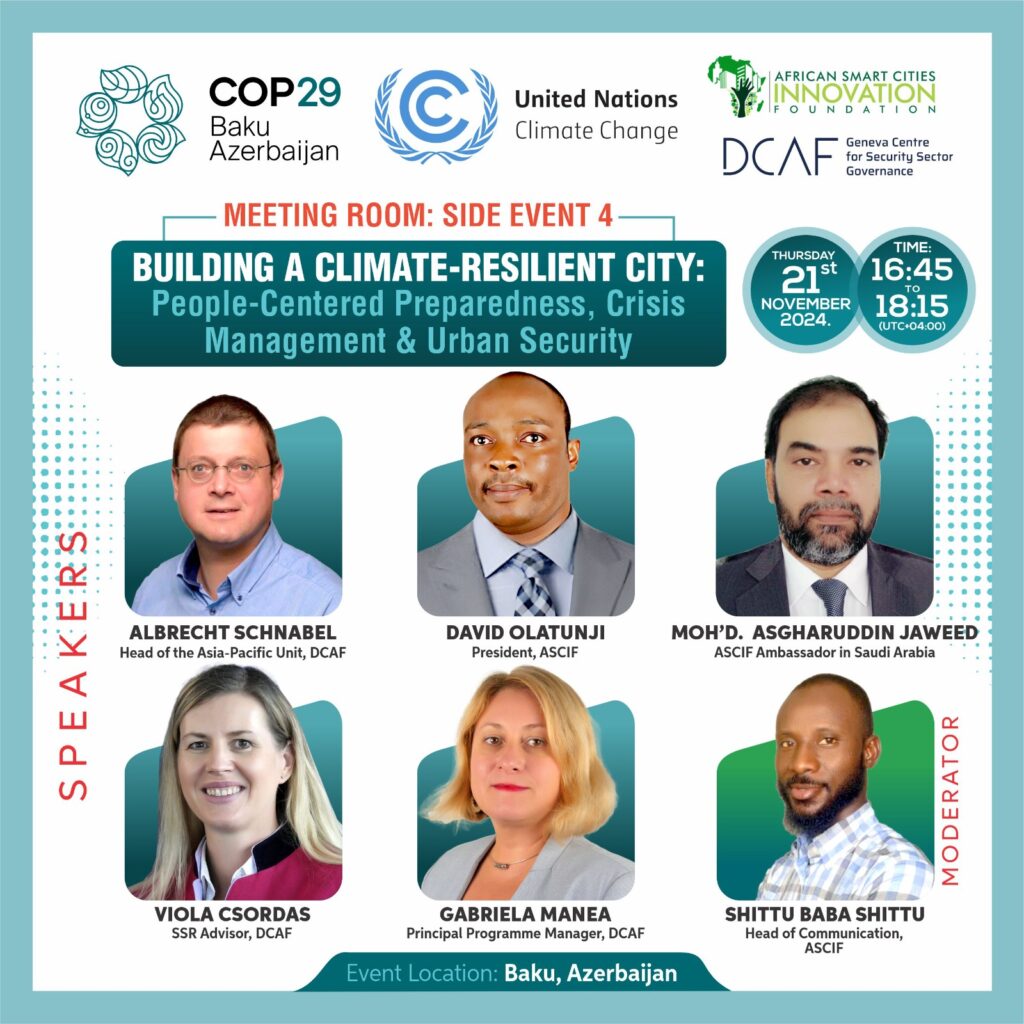
| Climate-Resilient Cities | Participates in global forums like COP27 (Egypt, 2022), COP28 (Dubai, 2023), and COP29 (Baku, 2024), focusing on themes like “Building a Climate-Resilient City.” | Advances urban planning for climate adaptation. |
| Water Crisis Solutions | Organizes UN side events on the “Impact of Water Crisis & Climate Change in Africa” to address water scarcity. | Raises awareness and develops practical solutions. |
| Capacity Building | Provides training for local leaders to implement climate adaptation and mitigation strategies. | Empowers communities to tackle climate challenges. |
| Global Collaboration | Works with international partners to strengthen climate action in Africa. | Fosters global-local partnerships for sustainable development. |
ASCIF’s efforts align with broader African initiatives, such as African Smart Cities Congress(ASCC) in Malawi, which integrate smart technologies to enhance urban sustainability. By participating in global climate forums and advocating for sustainable policies, ASCIF is helping African cities prepare for and mitigate the impacts of climate change.
Conclusion
Climate change poses significant challenges to Africa, from droughts and floods to food insecurity and health risks. Understanding what climate change does is the first step toward building a resilient future. Through its innovative work in smart city development, policy advocacy, and capacity building, the African Smart Cities Innovation Foundation (ASCIF) is leading the charge in creating sustainable, climate-resilient urban environments. By supporting organizations like ASCIF, we can help ensure a prosperous and resilient Africa for future generations.
Citations
- African Smart Cities Innovation Foundation (ASCIF). (n.d.). Retrieved from https://ascif.org/
- African Smart Cities Innovation Foundation (ASCIF) | One Planet Network. (2022). Retrieved from https://www.oneplanetnetwork.org/organisations/african-smart-cities-innovation-foundation-ascif
- How Californian and African City Connections Can Build Up Smart City Diplomacy | Carnegie Endowment for International Peace